
Types of Welding: A Practical Guide for Workshop, Site & Production Work
Types of welding processes vary depending on the job, the materials being joined and the environment you’re working in. A method that works well for general fabrication in a workshop may not be suitable for outdoor repairs, structural steel using low carbon steel plates, or precision components used in aerospace and other high-spec industries.
In real-world welding, the fabrication process you choose affects more than just the joint itself. It influences weld quality, strength, appearance, speed and overall efficiency. This guide focuses on practical welding rather than theory, breaking down the welding procedures you’re most likely to encounter day to day, where each one works best, and the typical equipment involved so you can make informed decisions based on how you actually work.
What Do We Mean by “Types of Welding”?
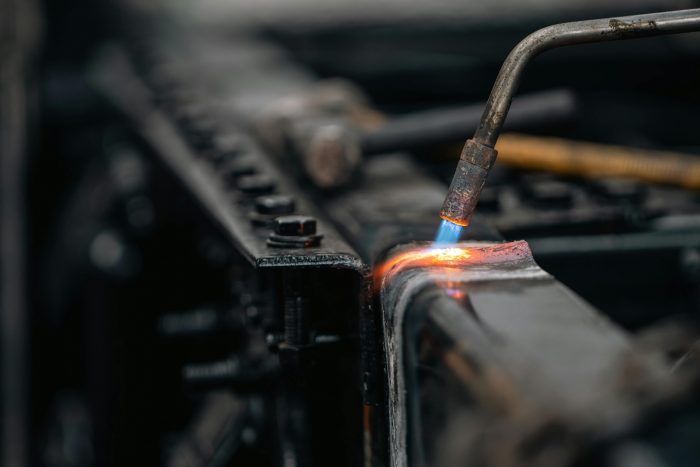
When we talk about different types of welding, it’s important to separate the welding process from the machine used. The process describes how the weld is made (such as GMAW, GTAW, or SMAW) while the machine simply delivers that process.
Welding processes also differ in how the weld is protected and how much is automated. Gas-shielded methods use external shielding gas for clean, controlled welds, while self-shielded processes cope better with wind and site conditions. Manual, semi-automatic and automated welding each suit different workloads, and choosing the right option directly affects weld quality, speed and overall efficiency. Just as important is using the right protective equipment, including grinding helmets and masks for welding, to stay safe during both prep work and active welding.
Core Welding Processes Compared
Instead of repeating the same information across each method, the table below shows how the most common workshop and site welding processes compare at a glance.
| Welding Process | How It Works | Best Materials | Typical Uses | Key Advantages | Limitations |
| MIG (GMAW / MAG) | Consumable wire + shielding gas | Carbon steel, aluminium, stainless | Fabrication, automotive, production | Fast, easy to learn, productive | Needs gas, limited outdoors |
| TIG (GTAW) | Tungsten electrode + hand-fed filler | Stainless, aluminium, thin metals | Precision, aerospace, custom work | Excellent control, clean welds | Slow, high skill |
| Arc (SMAW) | Flux-coated rod, self-shielded | Carbon steel, cast iron | Site work, repairs, construction | Portable, wind tolerant | Slag, slower |
| FCAW | Flux-filled tubular wire | Thick carbon steel | Heavy fabrication, shipbuilding | High deposition, deep penetration | More fumes, cleanup |
MIG Welding (Metal Inert Gas / MAG Welding)

MIG welding, also known as gas metal arc welding (GMAW) or metal active gas (MAG) welding, is one of the most widely used welding techniques in workshops and production environments.
It uses a continuously fed consumable electrode wire delivered through a welding gun. Shielding gas protects the molten metal in the weld pool, allowing smooth, uninterrupted welding with minimal stops. The wire acts as both the electrode and filler material, which is why MIG offers high welding speed and consistent results.
MIG welding works well on carbon steel, stainless steel, copper alloys and non-ferrous metals such as aluminium. It handles everything from thin metal plates to heavier sections, making it a versatile process for general industrial fabrication, automotive repair and light production.
Its main limitation is reliance on shielding gas, which makes it less suitable for windy outdoor conditions.
TIG Welding (Gas Tungsten Arc Welding / GTAW)

Gas Tungsten Arc Welding (GTAW), commonly known as TIG Welding, is chosen where weld quality, control and appearance are critical.
TIG welding uses a non-consumable tungsten electrode to create the electric arc. Filler wire is added separately by hand, giving the operator precise control over heat input and weld pool size. This level of control allows TIG to produce clean, narrow and deep welds with minimal spatter.
TIG excels on stainless steel, aluminium, thin metal plates and specialist alloys where heat control is essential. It’s widely used in custom fabrication, prototypes and high-spec industries such as aerospace. The trade-off is speed because TIG is slower and requires more skill than MIG, making it better for critical joints than for bulk production.
Shielded Metal Arc Welding (SMAW / Stick Welding)
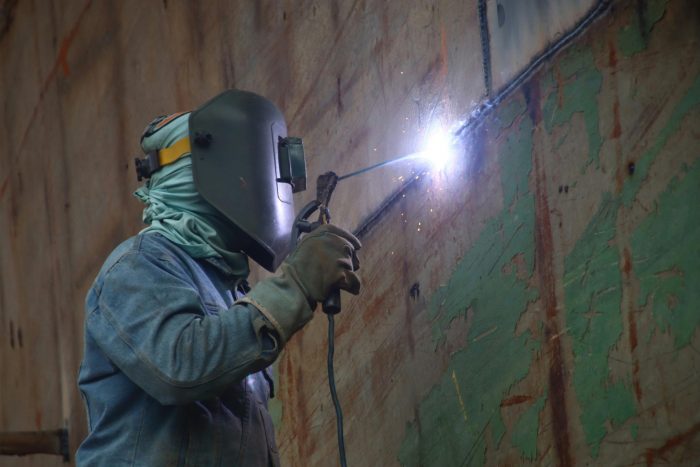
Shielded Metal Arc Welding (SMAW), also known as stick welding, remains one of the most practical options for site work, maintenance and repairs.
A flux-coated welding rod creates the electric arc and provides its own shielding as it melts, removing the need for external gas. This makes SMAW highly portable and tolerant of wind, dirt and less-than-perfect surfaces.
It performs well on carbon steel, ductile iron and cast iron, and is commonly used in construction, agricultural repairs (farmers for example), maintenance and outdoor structural work. While it produces more spatter and slag than MIG or TIG and requires post-weld cleanup, it remains popular because it works reliably where other welding processes struggle.
Other Types of Welding
Beyond the main workshop and site methods, several more specialised welding processes are used in heavy fabrication, high-volume production and precision manufacturing.
Specialist Welding Processes at a Glance
| Welding Method | Typical Use | Key Strength | Common Industries |
| Submerged Arc Welding (SAW) | Thick plates, long seams | High deposition, clean welds | Shipbuilding, pressure vessels |
| Electroslag Welding | Very thick vertical joints | Single-pass welding | Structural steel |
| Resistance Spot Welding | Sheet metal joining | Fast, repeatable | Automotive |
| Stud Welding | Fastener attachment | No drilling required | Construction |
| Plasma Arc Welding (PAW) | Precision thin materials | Controlled penetration | Specialist fabrication |
| Laser Beam Welding | Automated precision work | Narrow, deep welds | Automotive, medical |
| Electron Beam Welding | Critical high-spec parts | Deep penetration | Aerospace |
| Gas Welding | Repairs, thin pipework | Portable, simple | Maintenance |
These processes are typically chosen for specific materials, joint designs or production requirements rather than general-purpose fabrication.
Solid-State and Specialised Welding Processes
Some welding methods join materials without fully melting them. These are usually reserved for niche or high-precision applications.
| Process | How It Joins Metal | Typical Use |
| Forge Welding | Heat and pressure | Blacksmithing |
| Friction Welding | Motion and pressure | Shafts, automotive |
| Ultrasonic Welding | Vibration and pressure | Electronics, plastics |
| Explosion Welding | Controlled impact | Cladding, heavy industry |
Multiprocess Welding: One Setup, Multiple Welding Types
Many modern workshops use multiprocess welding machines that support MIG/MAG, TIG and Arc welding from a single unit, which is why a MIG vs TIG vs Arc welding guide can be useful when comparing the best setup for different types of fabrication and repair work. These setups make sense where space is limited or work varies from job to job.
While dedicated machines often offer the best performance for a single process, multiprocess welders provide a practical balance of flexibility, cost and capability for general fabrication and maintenance work.
Choosing the Right Type of Welding
Selecting the right welding process depends on several practical factors:
| Requirement | Best Welding Choice |
| Outdoor or windy conditions | Arc (SMAW), FCAW |
| High production speed | MIG, Resistance Welding |
| Precision or visible welds | TIG, Laser |
| Thick structural steel | FCAW, SAW |
| Limited workshop space | Multiprocess welder |
Choosing the right welding process is about understanding how you work, the materials you handle and the results you need to achieve. With a clear view of the different types of welding and where each one performs best, it becomes much easier to select equipment that supports quality, efficiency and long-term reliability. If you’re looking to upgrade your setup or want practical advice on machines, consumables or accessories, the team at Tec Products is always on hand to help you find the right solution for the work you do.
Frequently Asked Questions About Types of Welding
What is the easiest type of welding to learn?
MIG welding is generally the easiest due to its continuous wire feed and stable arc.
Which welding type is best for outdoor work?
Arc (SMAW) welding is best suited to outdoor conditions because it doesn’t rely on shielding gas.
Is TIG or MIG better for production work?
MIG usually wins for production thanks to speed and efficiency, while TIG is chosen for precision and finish.
Do I need different PPE for different welding types?
Yes. While a welding helmet is universal, shade levels and glove thickness may vary depending on arc intensity and heat.
Comments are closed here.