
Understanding EWM ForceArc, RootArc, ColdArc and WiredArc MIG Welding Processes
EWM, a leading innovator in welding technology, offers various advanced welding processes designed to improve efficiency, quality, and adaptability in various applications. Among these are ForceArc, ColdArc, RootArc, and WiredArc welding processes. These processes are designed specifically to work with the EWM Titan and Phoenix MIG Welding Machines. Here’s a breakdown of their differences:
ForceArc Welding
Overview:
ForceArc is a highly efficient, high-performance MIG/MAG welding process for heavy-duty applications. It provides deep penetration and high deposition rates, making it ideal for thick materials and challenging welds.
Key Features:
- Deep Penetration: Achieves strong, deep welds with fewer passes, reducing overall welding time.
- High Deposition Rate: Increases productivity by depositing more material in less time.
- Reduced Spatter: Produces clean welds with minimal post-weld cleaning required.
- **Energy Efficiency:** Lower heat input reduces distortion and energy consumption.
Applications:
- Heavy steel construction
- Shipbuilding
- Pipeline welding
- Structural engineering

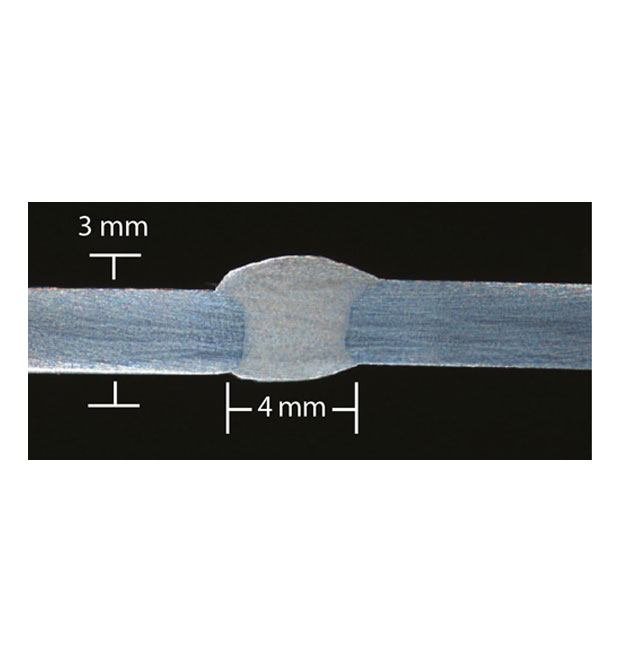
RootArc Welding
Overview:
RootArc is specifically designed for root pass welding, focusing on achieving high-quality root welds with excellent penetration and control. It is particularly useful in applications where the root pass is critical for the integrity of the joint.
Key Features:
- Excellent Penetration Control:** Ensures complete fusion at the root, critical for joint integrity.
- High Stability: Provides a stable arc, reducing the likelihood of defects such as lack of fusion or porosity.
- Ease of Use: Simplifies the welding process, making it easier for welders to achieve consistent results.
Applications:
- Pipe welding
- Pressure vessel manufacturing
- Any application requiring high-quality root passes
ColdArc Welding
Overview
Heat-reduced, low-spatter short arc for high dimensional stability welding, brazing, and root welding with excellent gap bridging capabilities.
Key Features
- Less distortion and reduced discolouration thanks to minimised heat input
- Considerably reduced spatter thanks to virtually power-free material transfer
- Impressive process stability, even with long hose packages without additional sensor leads
- Commercial torch systems, as the material is transferred without drive in the torch, cause no wear and tear
- Easy welding of the root passes in all sheet thicknesses and in all positions
- Perfect gap bridging even with inconsistent gap widths
- Excellent wetting of surfaces when brazing thin metal sheets
- Minimal finishing work, also optimum for visible seams thanks to the low-spatter process
- Unalloyed, low-alloy and high-alloy steels and also dissimilar joints of even the thinnest metal sheets
- Brazing of CrNi sheets with CuAl8/AlBz8
- Brazing and welding of coated metal sheets, e.g. with CuSi, AlSi and Zn
- Root welding of non-alloyed and low-alloy steels and high-tensile fine-grained steels
- Visible CrNi seams within the thin metal sheet range
Applications
- Automotive industry
- perfect for use on automation setup
- Aerospace manufacturing
- General industrial fabrication
- Mass production environments


WiredArc Welding
Overview:
WiredArc is an innovative MIG/MAG process optimized for automation and robotic welding. It integrates advanced control systems to deliver precise and consistent welds, making it ideal for automated production environments.
Key Features:
- Precision: Advanced control systems ensure precise arc characteristics and consistent weld quality.
- Versatility: Suitable for a wide range of materials and thicknesses.
- Automation-Friendly: Optimized for use with welding robots and automated systems, enhancing productivity and reducing labour costs.
- Consistent Quality: Delivers repeatable and high-quality welds, which is crucial for automated manufacturing.
Applications:
- Automotive industry
- Aerospace manufacturing
- General industrial fabrication
- Mass production environments
Summary
Each of these EWM welding processes offers distinct advantages tailored to specific applications and requirements:
ForceArc: Best for high-deposition, deep-penetration welds in heavy-duty applications.
RootArc: Ideal for critical root pass welding with excellent penetration and stability.
WiredArc: Perfect for automated welding, providing precision and consistency in production environments.
Comments are closed here.