
Best Welding Helmet: A Practical Buyer’s Guide
There’s no single best welding helmet that suits every welder or every welding job. The right welding helmet depends on how you work, what processes you use and the conditions you’re welding in. A helmet that performs well for MIG welding in a fabrication shop may not be the best option for low-amp TIG work, Arc welding on site or plasma cutting, where bright light, position and durability play a much bigger role.
This guide focuses on real-world performance rather than marketing claims you see across the market today. We break down what actually matters when choosing a new welding helmet, including features, use cases and trade-offs that make a big difference during long shifts. The goal is to help you protect your vision, reduce eye fatigue and choose equipment that supports consistent results across real welding operations.
What Makes the Best Welding Helmet?
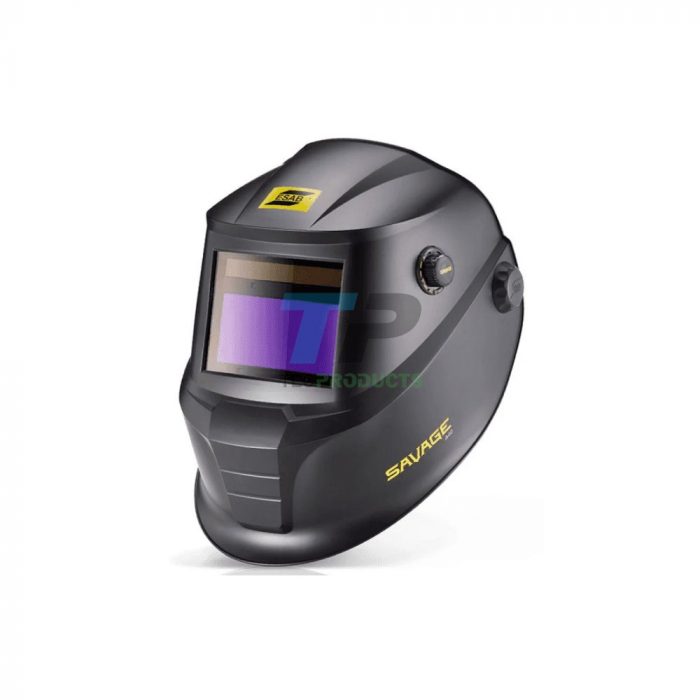
The best welding helmet balances eye protection with a clear, accurate view of the weld pool. Modern auto darkening welding helmets use advanced auto darkening filters and multiple arc sensors to protect the welder’s eyes from arc intensity, UV and IR radiation while maintaining a usable light state before the arc is struck. Poor clarity increases strain, raises the risk of arc eye, and makes precise work far more difficult.
Comfort becomes a top priority when you’re welding for long hours. A helmet that distributes weight evenly across the welder’s head, offers adjustable headgear and accommodates users who wear glasses helps reduce neck strain and pressure points. Poor fit affects focus, consistency and comfort long before the welding task itself becomes challenging.
Reliability is just as important. Whether you’re welding at various angles, in low-light conditions or outdoors, the helmet should respond instantly and consistently. While expensive helmets aren’t always better, the best value comes from helmets that meet recognised safety standards, deliver dependable performance and protect your vision across demanding welding projects, not simply the lowest price.
Auto-Darkening vs Passive Welding Helmets
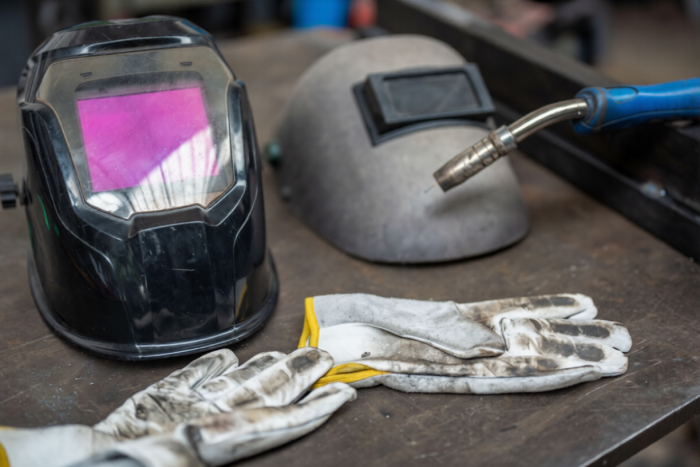
When choosing a welding helmet, one of the first decisions is whether to go with auto darkening welding technology or a traditional passive design. Both can protect your eyes effectively, but they suit different welding operations and levels of use.
What auto-darkening helmets do well: Auto darkening welding helmets react instantly when the arc is struck, using multiple arc sensors, often four arc sensors, to detect light changes from different positions. This allows accurate positioning before welding starts, improves visibility in bright light, and reduces head movement.
When passive helmets still make sense: Passive helmets are simple, heavy duty, and reliable with no electronics. They’re suitable for occasional welding tasks, site backup use or environments where advanced features aren’t required.
Reaction speed, shade control and visibility: Auto-darkening helmets offer adjustable shade ranges, sensitivity and delay time, which helps prevent eye strain when switching between welding and grinding. Some models also include grinding mode with an external grind button for quick transitions.
Professional vs occasional use: For daily professional use, auto-darkening helmets with fast response times and multiple sensors offer better comfort and efficiency. For occasional work, passive helmets can still protect effectively.
Key Features to Look for in the Best Welding Helmet
The best welding helmet isn’t defined by a single feature, but by how well key elements work together in real use. Understanding what to look for in lens quality, adjustability, comfort and power helps you choose a helmet that performs consistently across different welding tasks and environments.
- Optical Clarity & Lens Quality
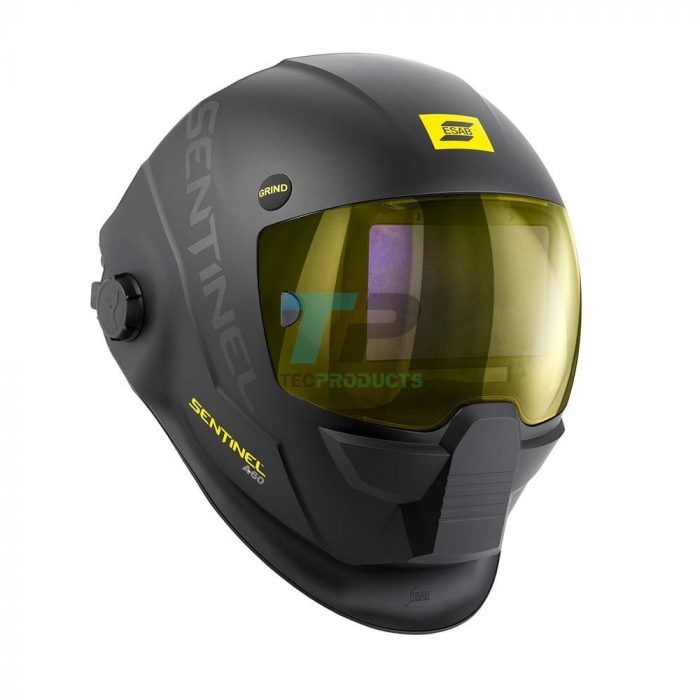
Lens quality directly affects weld accuracy and comfort. Modern helmets (such as the ESAB Sentinel A60) now offer true colour technology, giving a clear view of the weld pool, joint edges and surrounding material instead of the traditional green tint. A larger viewing area, large viewing area, or even a panoramic view improves peripheral vision, especially on positional welds.
This clarity is critical for TIG welding and precision work, where small movements matter. Poor visibility increases eye fatigue and makes fine control far more difficult.
- Shade Range & Sensitivity Control
Different welding processes require different shade levels. Adjustable shade control allows you to move between MIG, TIG and Arc welding without compromising protection. Sensitivity adjustment ensures the helmet reacts correctly to low-amp TIG arcs without flicker while still handling higher-output welding.
Some helmets also include features like X-Mode, which uses arc detection instead of light detection for more reliable performance in harsh lighting conditions.
- Comfort, Fit & Headgear
A helmet should feel balanced, not front-heavy. Adjustable headgear, proper weight distribution and compatibility with a hard hat all contribute to comfort during long welding sessions. Poor fit leads to fatigue, reduced focus and inconsistent weld quality.
- Power Source (Battery vs Solar Assist)
Most modern auto-darkening helmets use replaceable batteries, often supported by solar assist. Battery-powered helmets offer reliable performance in low-light environments, while solar assist helps extend battery life.
Ease of maintenance matters. Helmets that are simple to service are more likely to perform consistently over time.
Choosing the Best Welding Helmet for Different Welding Types
Different welding processes place very different demands on a welding helmet. Understanding how MIG, TIG and Arc welding affect visibility, sensitivity and durability makes it easier to choose a helmet that performs properly for the work you actually do.
Best Welding Helmet for MIG Welding
MIG welding benefits from fast reaction times, a stable darker shade, and good all-round visibility. In production environments, comfort and reliability matter most. Adjustable settings are useful for fabrication work where tasks vary.
Best Welding Helmet for TIG Welding
TIG welding places high demands on helmet performance, particularly at low amperages, where arc detection can be more challenging. A helmet with excellent low-amp sensitivity, fast reaction time and reliable sensors is essential to ensure consistent darkening without flicker during precise, detailed work.
Optical clarity is especially important for TIG welding. True colour lenses and a clear, stable view of the weld pool help with filler placement, bead control and overall finish. Comfort also matters, as TIG welding often involves longer, more controlled sessions where reduced eye strain and stable headgear make a noticeable difference.
Best Welding Helmet for Arc (MMA) Welding
Arc welding often involves higher output and more challenging environments, particularly on-site. Durability and robustness are important, as helmets may be exposed to knocks, spatter and harsher conditions.
For outdoor and site work, a reliable auto-darkening response and solid construction matter more than advanced optics. A helmet that performs consistently in variable lighting and weather conditions is usually the better choice.
Workshop vs Site Work – What Really Matters?
Workshop environments allow you to prioritise clarity, comfort and lighter helmets with larger viewing areas, particularly when working at fixed welding tables in controlled lighting. These features help reduce fatigue and improve accuracy over time, especially during detailed fabrication work.
Site work places very different demands on equipment. Variable lighting, harsher conditions and frequent movement mean a rugged, reliable helmet often outperforms lighter designs. Knowing whether you spend most of your time in the workshop or on site helps narrow down the features that truly matter for the way you work.
Common Mistakes When Choosing a Welding Helmet
Choosing a welding helmet isn’t just about brand names or price tags. Many mistakes come from overlooking real-world performance.
- Buying based on price alone: Cheaper options often sacrifice clarity or reliability.
- Ignoring headgear quality: Poor fit causes fatigue and inconsistency.
- Overlooking lens quality for TIG work: Visibility and sensitivity matter more than many expect.
- Choosing one helmet for everything: Mixed welding tasks require adjustability.
Avoiding these mistakes helps ensure your helmet protects and supports your work.
Final Thoughts on Choosing the Best Welding Helmet from Tec Products
Selecting the best welding helmet starts with understanding how you work. Factors like process type, environment and shift length all play a role in protecting your vision and maintaining performance.
Tec Products supplies a carefully selected range of welding helmets that meet recognised American National Standards Institute and international safety standards. Whether you’re upgrading to a new helmet, considering advanced models like the ESAB Sentinel A60, or exploring options with integrated powered air purifying respirator systems to reduce exposure to welding fumes, our team is on hand to help you choose equipment that protects what matters most.
Frequently Asked Questions
What is the best welding helmet for beginners?
For beginners, an auto-darkening helmet with simple controls and good clarity is often the easiest and safest option, as it reduces the need for manual adjustment.
Is auto-darkening always better?
Not always. Auto-darkening helmets offer more flexibility and comfort for regular welding, but passive helmets can still be suitable for occasional use or as a backup.
How often should a welding helmet be replaced?
A helmet should be replaced if the lens becomes damaged, the auto-darkening function becomes unreliable, or the headgear no longer fits securely.
Does helmet quality affect weld results?
Yes. Poor visibility, slow reaction times or uncomfortable fit can all affect accuracy, consistency and fatigue, which in turn impacts weld quality.
Comments are closed here.